

A critical part of the drainage network
Positioned upstream of culverts and other critical infrastructure, trash screens are designed to intercept debris before it can restrict flow or cause blockages further downstream.
Most authorities already inspect and maintain trash screens as part of planned programmes, with additional visits often triggered following heavy rainfall or reports of flooding. The challenge isn’t knowing that a trash screen needs maintaining—it’s understanding what happens between inspections.
Conditions at a trash screen can change significantly over the course of hours or days. Debris can accumulate rapidly during a storm, naturally clear as water velocities increase, or remain in place long after rainfall has ended. Without visibility between site visits, operational teams are often relying on a single point-in-time observation to understand an asset that is constantly changing.
Building a clearer picture between inspections
Installed directly overlooking the asset, SMART Shot AI combines regular image capture with AI-supported review to build a visual history of how conditions develop over time. Completely self-contained, solar powered and operating over its own independent network connection, it can be deployed at locations where frequent inspections are difficult, costly or simply impractical.
Rather than simply identifying that a screen has become obstructed, SMART Shot AI helps authorities understand how and when those conditions develop.
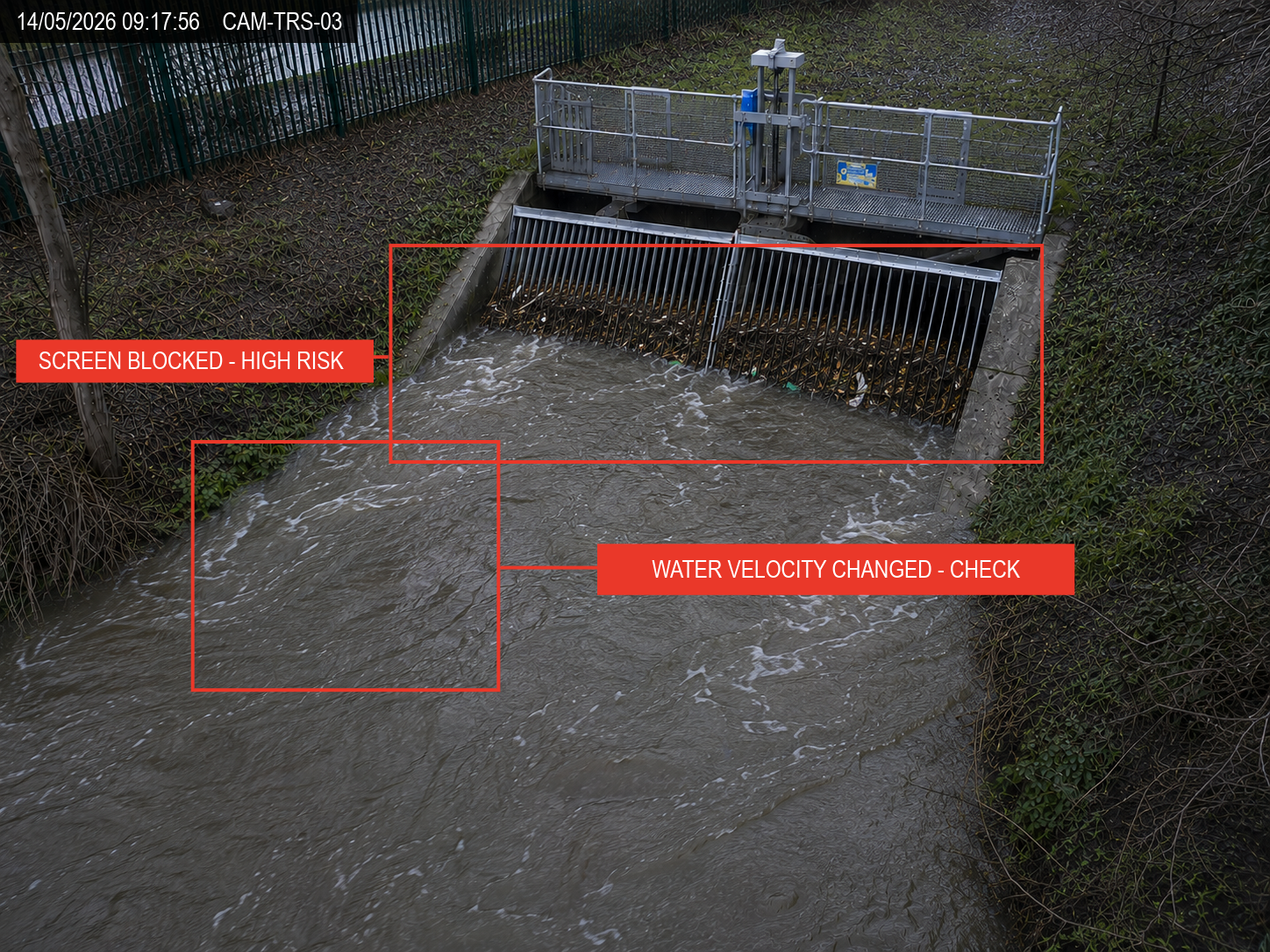 For example, a trash screen may regularly reach 70–80% capacity during periods of intense rainfall before naturally clearing as water pressure increases. Another location may continue accumulating debris long after rainfall has stopped, indicating that intervention is required. Over time, this evidence begins to build a much clearer understanding of the operational behaviour of each individual asset.
Learning how assets behave
That understanding has value well beyond responding to individual incidents.
By learning how assets behave during different weather events, authorities can begin to understand the capacity, resilience and operational characteristics of their drainage infrastructure. Maintenance programmes can become more evidence-led, inspections can be better targeted and future investment decisions can be supported by real operational data rather than assumptions.
Looking beyond the asset
The benefits also extend beyond the asset itself.
A blocked trash screen doesn’t simply affect one location. It can influence water levels upstream, increase pressure on culverts, contribute to surface water flooding and affect communities, highways and other connected infrastructure further downstream. Understanding how these critical assets perform over time provides another layer of operational awareness across the wider network.
Supporting evidence-led maintenance
SMART Shot AI isn’t designed to replace inspections or operational expertise. Instead, it provides additional evidence between inspections, helping authorities understand what happened after a team left site and building a more complete picture of how critical infrastructure behaves over time.
As local authorities continue moving towards more evidence-led and risk-based maintenance, understanding asset behaviour may become just as valuable as understanding asset condition.